01
Priced on storage, not people
Software on your own servers, priced on what your customers store. Adding a customer costs you nothing until they store more. You can start free.

JDrive for Hosting
On your own servers. Priced on the storage your customers use, not on how many of them there are.
Sell your own Dropbox under your own name, tomorrow, for less than an hour of a developer’s time a month.
Built for the seller
01
Software on your own servers, priced on what your customers store. Adding a customer costs you nothing until they store more. You can start free.
02
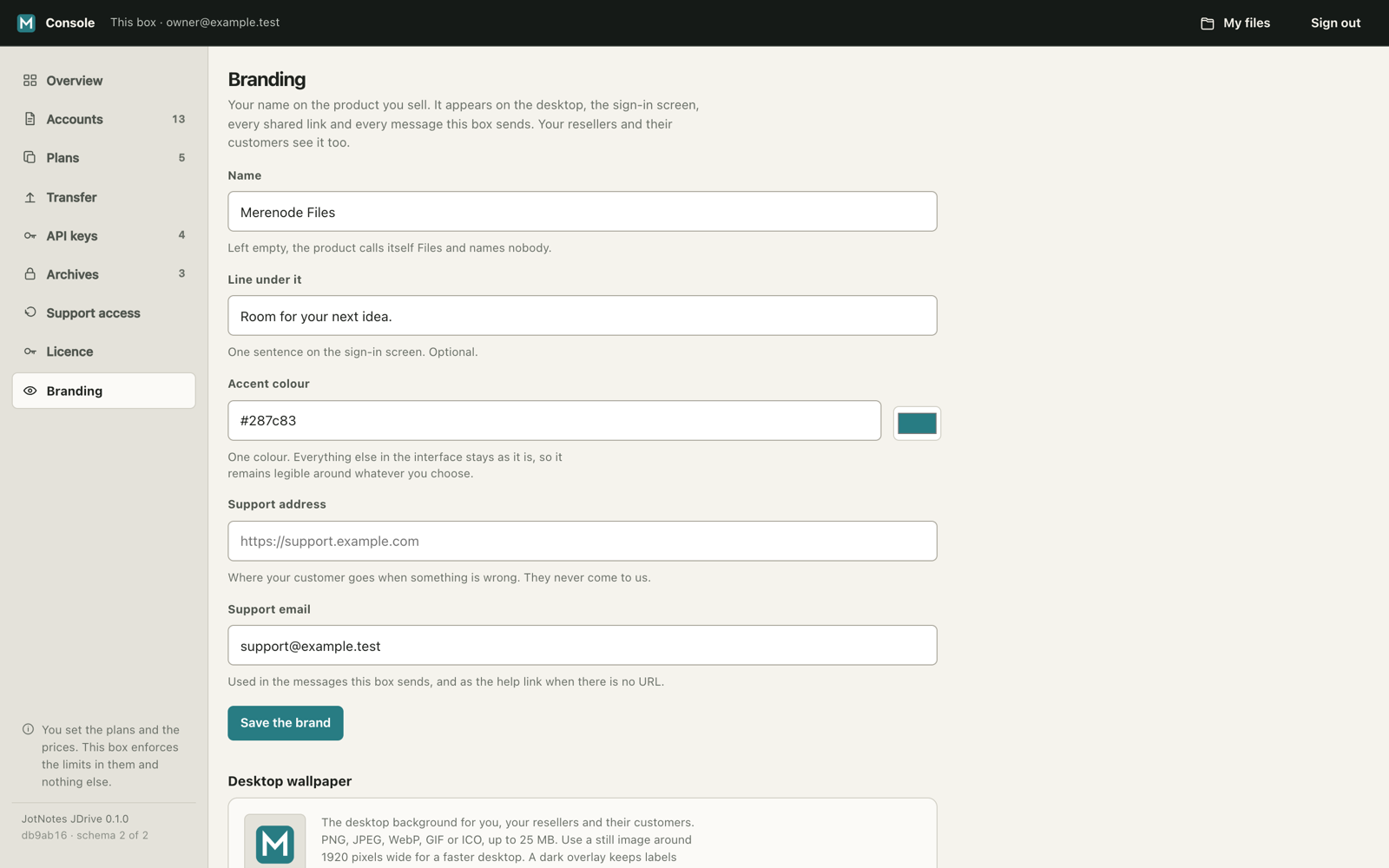
Your brand appears on every screen and message. Your plans are enforced, resellers can sell under you, customers sign in from your client area, and your systems are told when accounts change.
03
If a licence lapses, new accounts and uploads pause. Every stored file keeps opening, downloading and sharing.
04
Your staff can see a customer’s screens from that customer’s record. They never see the customer’s files.
05
One process serves every account and uses 35 MB while idle. You do not run a separate copy for each customer.
The margin question
A hosting company has many customers, each using a little storage. JDrive charges for what those customers store instead.
| Licence cost to a hosting company | JDrive for Hosting | Nextcloud Enterprise | ownCloud commercial | Seafile Pro |
|---|---|---|---|---|
| How it is priced | Storage your customers use | Per user, 100 minimum | Per user | Per user |
| 100 customers, 5 GB each | $49 a month 500 GB |
$689 | $1,739 | $93 |
| 1,000 customers, 5 GB each | $199 a month 5 TB |
$6,890 | $17,390 | $926 |
The rivals’ figures are published per-user list prices for organisations read on 2026-09-13: Nextcloud pricing, ownCloud pricing, and Seafile pricing. Deals for providers are not published, and all three have a free community edition.
JDrive vs NextcloudJDrive vs ownCloudJDrive vs SeafileSee every comparison
A clear trade-off
There is no desktop sync app, no mobile app and no two-factor sign-in in this version. It does not offer live document editing.
What works today
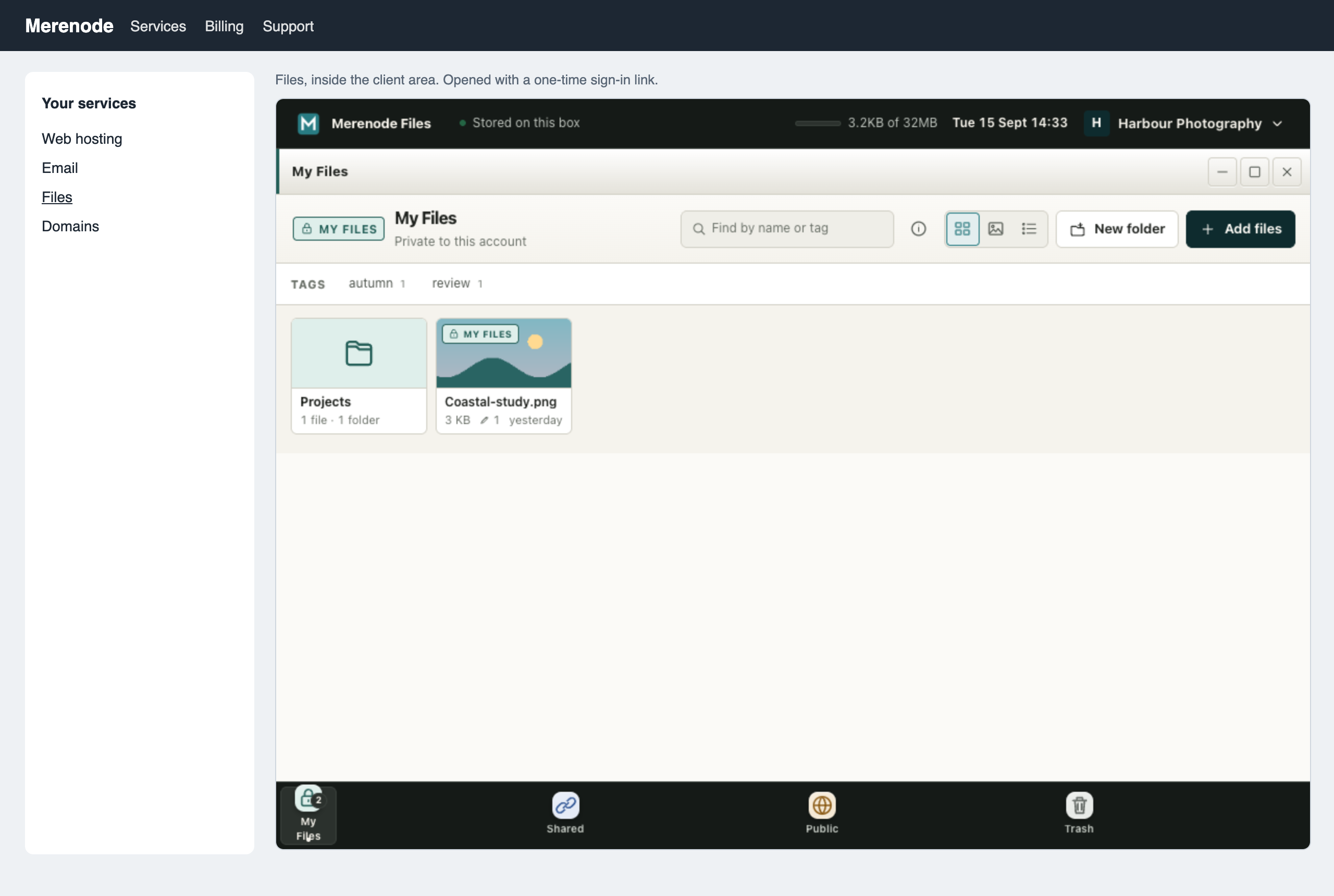
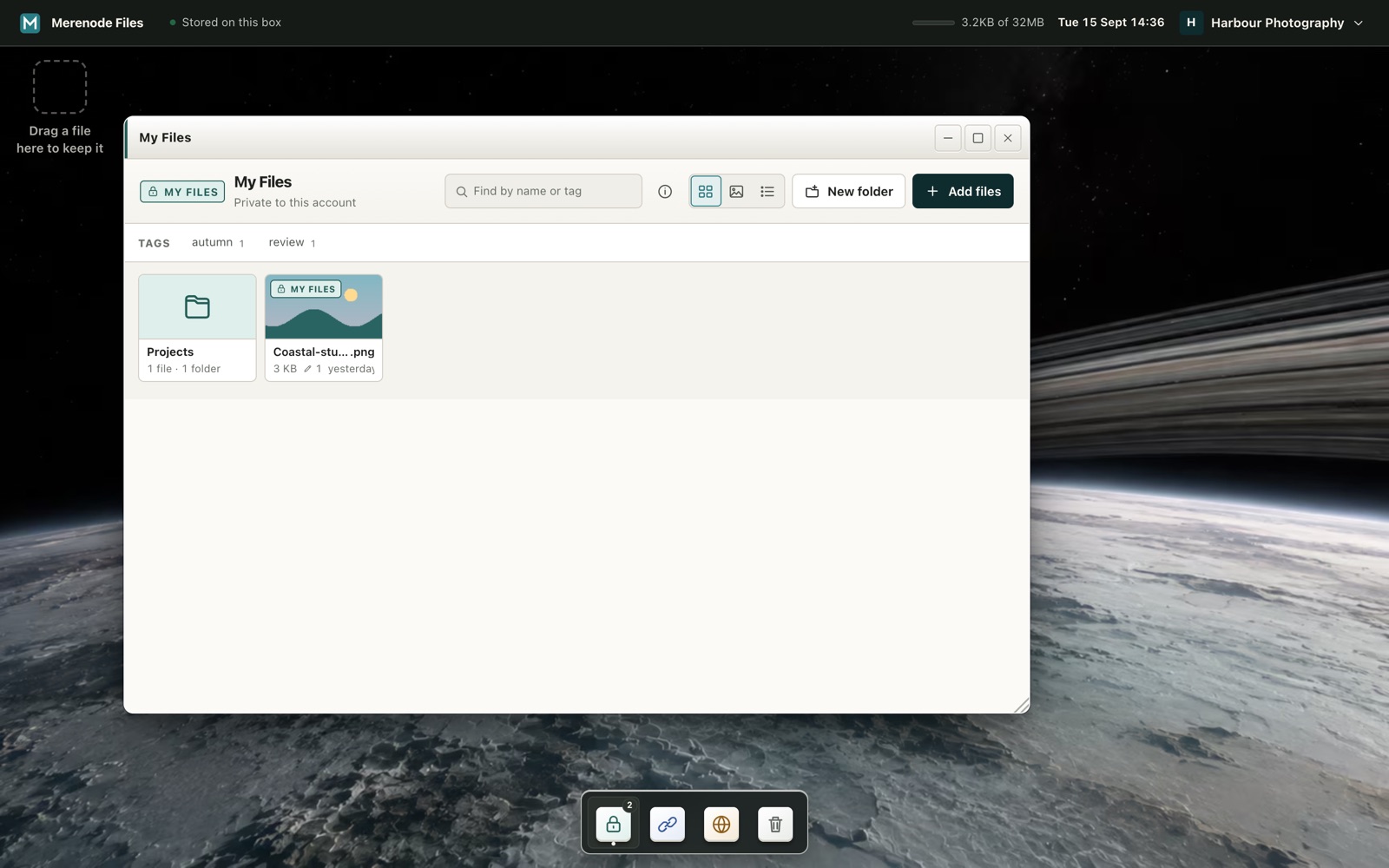
Customers use their files in a browser. There is nothing for them to install.
Built and walked
Customers can sign in from your client area. Your billing system can create, suspend, upgrade and end accounts, and it is told when accounts change.
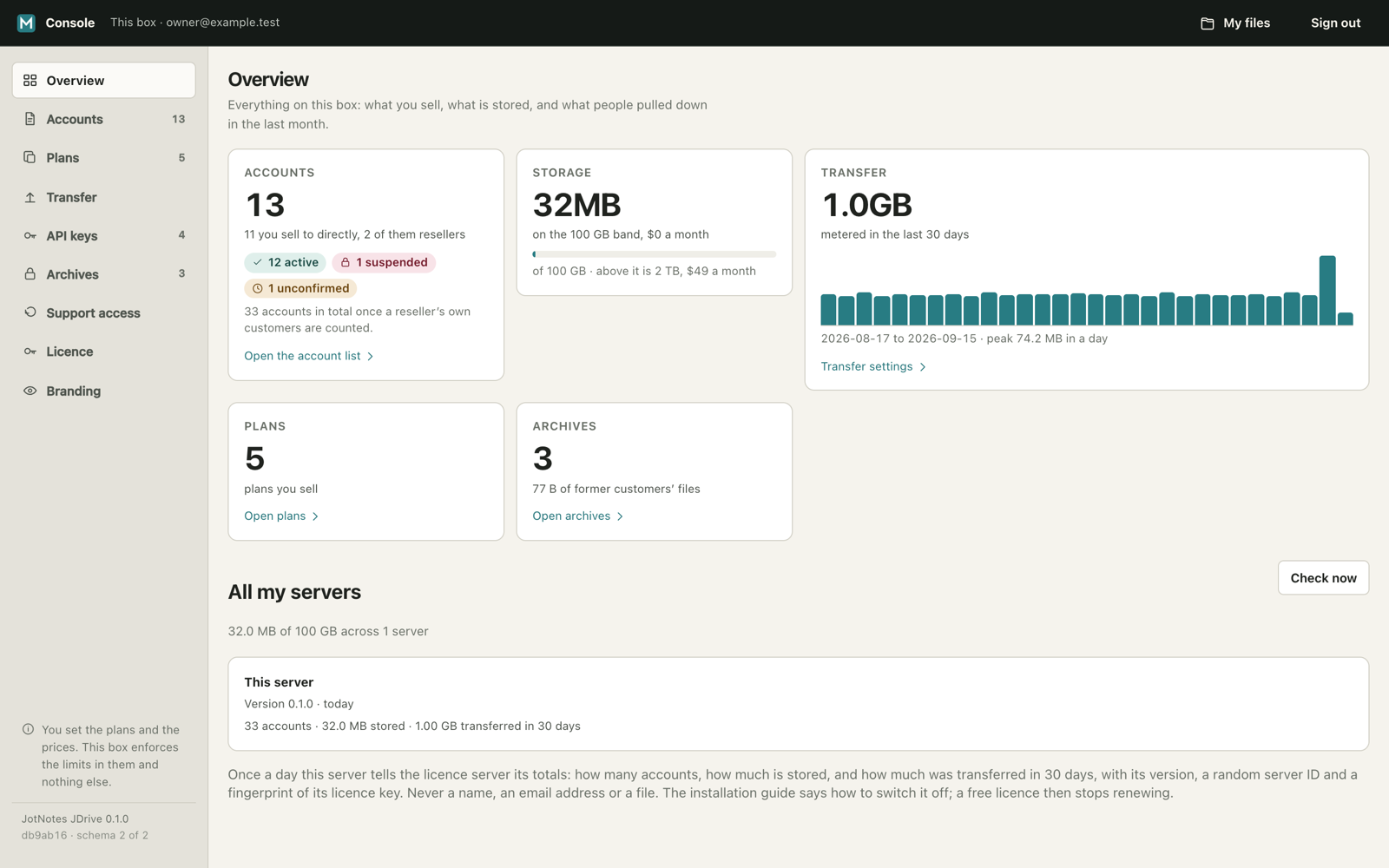
The screen beside this was taken from a live server, over the internet, not a mock-up.
Inside it
Price, said plainly
JDrive for Hosting is priced on what customers actually store across all your servers. The account count does not set the price.
1
Sell storage beside hosting, email and domains, under your brand, at your price. Dropbox, Box, Google and pCloud sell direct to your customers instead of through you.
2
Your billing system creates, suspends, upgrades and ends accounts through a key. Customers sign in from your client area, your billing system is told when accounts change, and resellers use the same machinery under you.
3
Keeping files is the easy half. Selling them is the other half, and building and maintaining that half costs more than paying for it.
| You get | Without it you build and maintain |
|---|---|
| Your brand on everything: name, logo, icon, colours, wallpaper, emails, sign-in page | A white-label layer over every screen and message |
| Plans with storage, transfer and switches, enforced | A metering and entitlement engine |
| Resellers with their own customers, plans and keys, one level down | A second tier of permissions, billing and isolation |
| Billing keys for your billing system, with safe retries, and a ready module for Blesta | A provisioning API and its security boundary |
| One-click sign-in from your client area | A single sign-on system that cannot become a skeleton key |
| Notifications to your billing system, signed and retried | Webhooks, signing, retries and a guard against being turned inward |
| Transfer (bandwidth) metering and limits | A meter on every download path |
| Support access: see a customer’s screens, never their files, on their record | An audited, limited impersonation system |
| An overview of accounts, storage and transfer | Reporting |
| Security fixes and updates, tested on five Linux versions every release | The same, for ever, on your own copy |
Free to start.
Your customers are never locked out. If a licence lapses, new accounts and uploads pause; every file keeps opening, downloading and sharing.
$49/month
Up to 2 TB used
Buy up to 2 TB$199/month
Up to 20 TB used
Buy up to 20 TB$599/month
Up to 100 TB used
Buy up to 100 TBQuoted
Above 100 TB
Talk to usStorage means what customers actually store, not the amount you sell or allocate.
Download
Install JDrive for Hosting and use all of it for 30 days. Then keep it free for up to 100 GB across all your servers, or buy a band.
Download JDrive for Hosting 0.1.0 Try the hosting console first
Signed by JotNotes. Put the signature, the signed statement and verify-release.js beside the download and run node verify-release.js jdrive-0.1.0.tgz before installing (SHA-256). Ubuntu 22.04, 24.04 and 26.04, Debian 12 and 13.
Read further
All JDrive comparisonsGuide to reselling cloud storageGuide to selling under your brandGuide to JDrive as a Nextcloud alternative